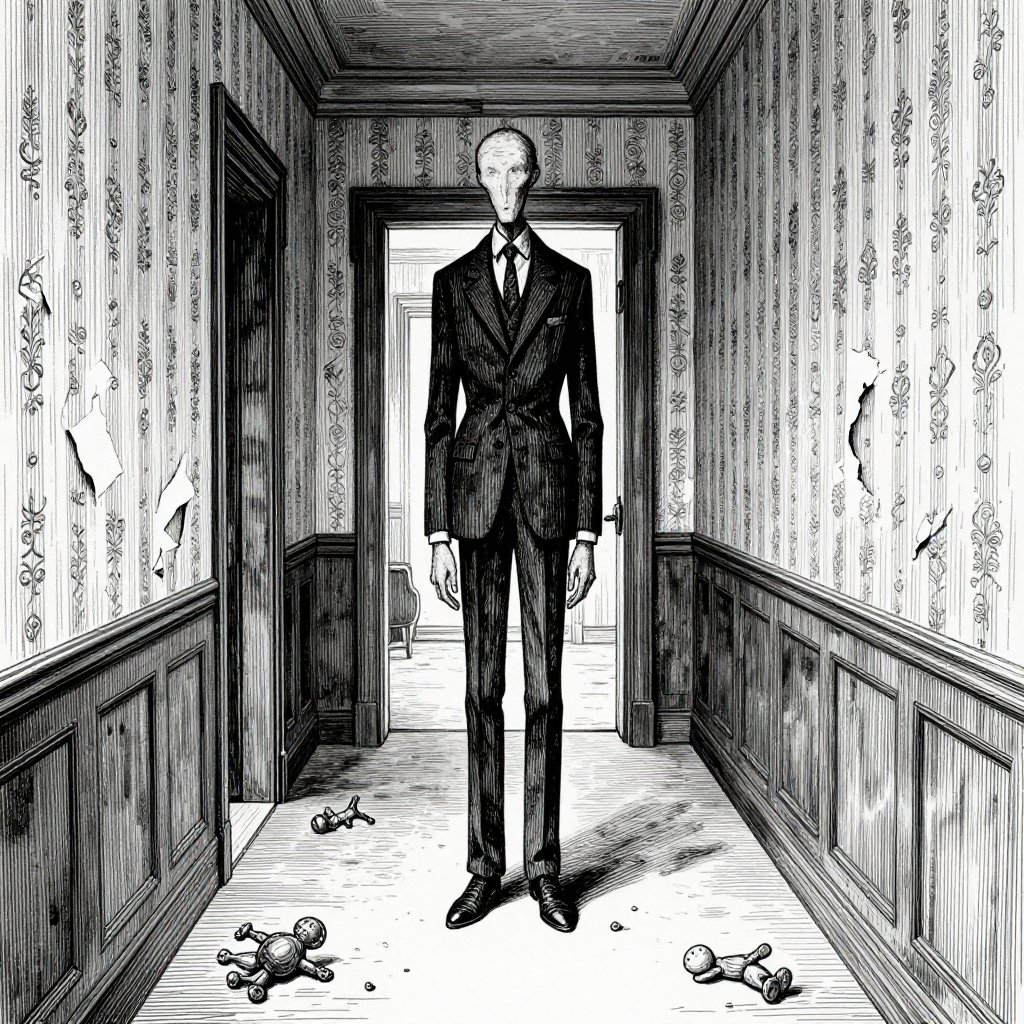
The Forum Post
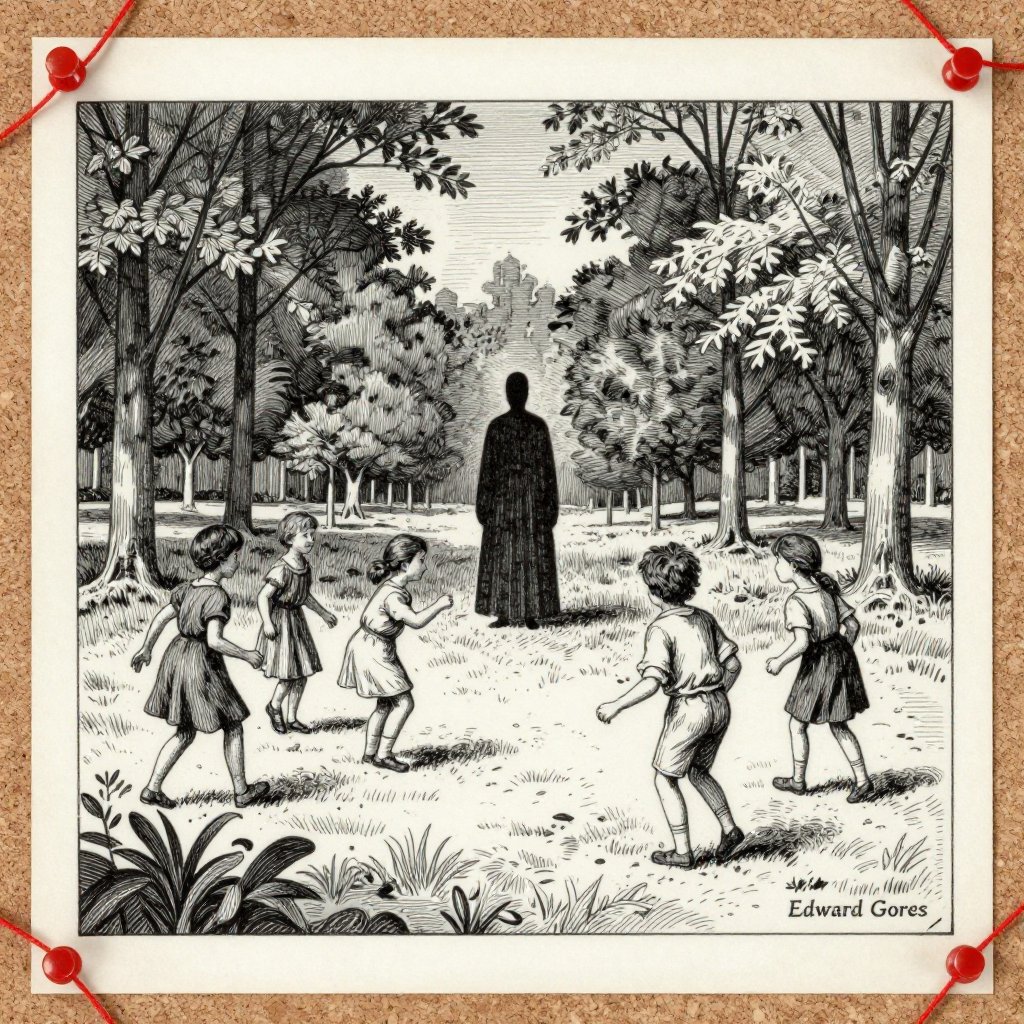
On June 10, 2009, a user named Victor Surge posted two black-and-white photographs to the Something Awful internet forum. The photos showed groups of children. In the background of each, a tall, thin figure in a dark suit stood among the trees. It had no face. It had too many arms. Or maybe tentacles. The posts came with fictional captions written as if they were real historical documents.
The thread was a Photoshop contest. The prompt was "create paranormal images." Victor Surge, whose real name is Eric Knudsen, won. Not officially. But he won in the only way that matters on the internet: people remembered his entry and forgot everyone else's.
The Growth
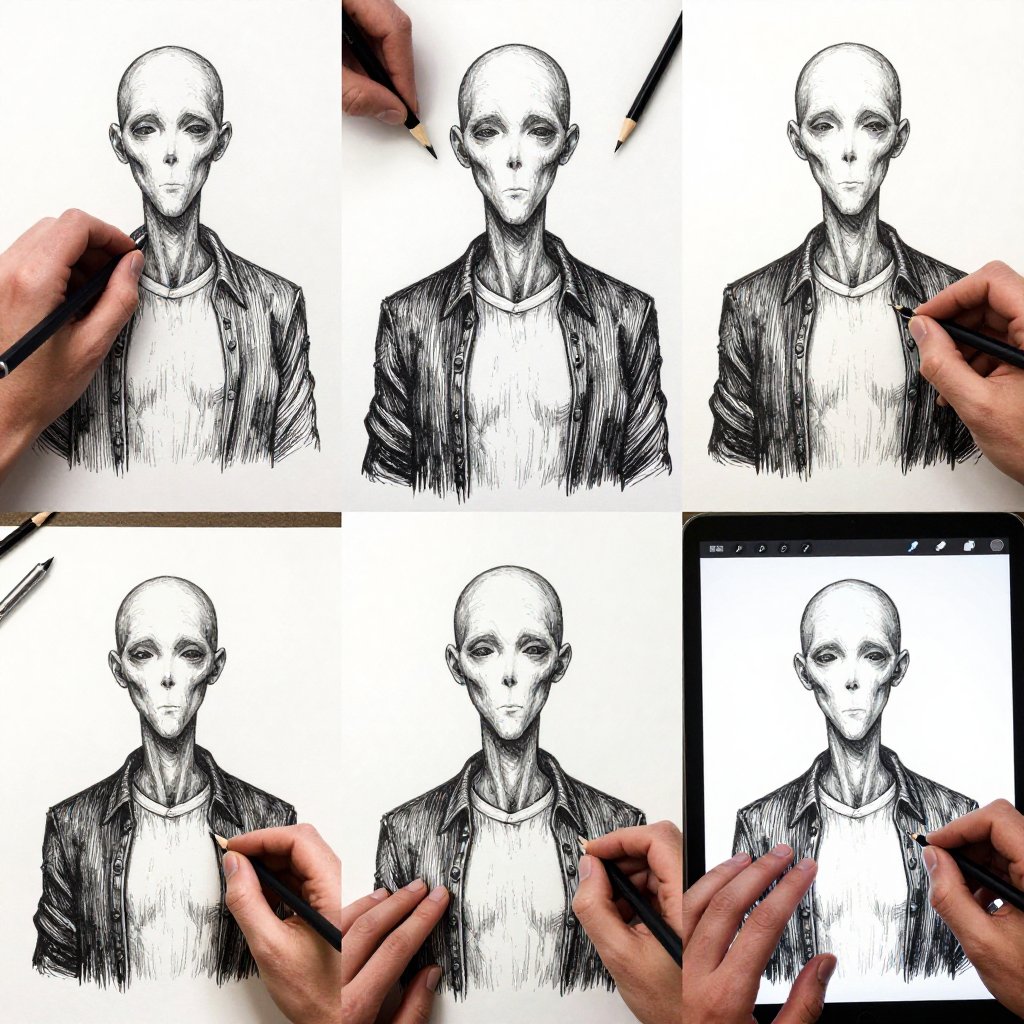
Within weeks, other users began adding to the mythology. Stories appeared. Drawings appeared. Short films appeared. The Slenderman had no official rules, no copyright enforcement, and no single author. He was open-source horror.
The character gained a backstory through collective writing: he stalked children, he caused memory loss, he could teleport, he appeared in the background of photographs. His face was blank, which meant every viewer projected their own fears onto it. He was tall, which made doorways feel smaller. He wore a suit, which made professionalism feel sinister. Every design choice, even the accidental ones, worked.
The Games
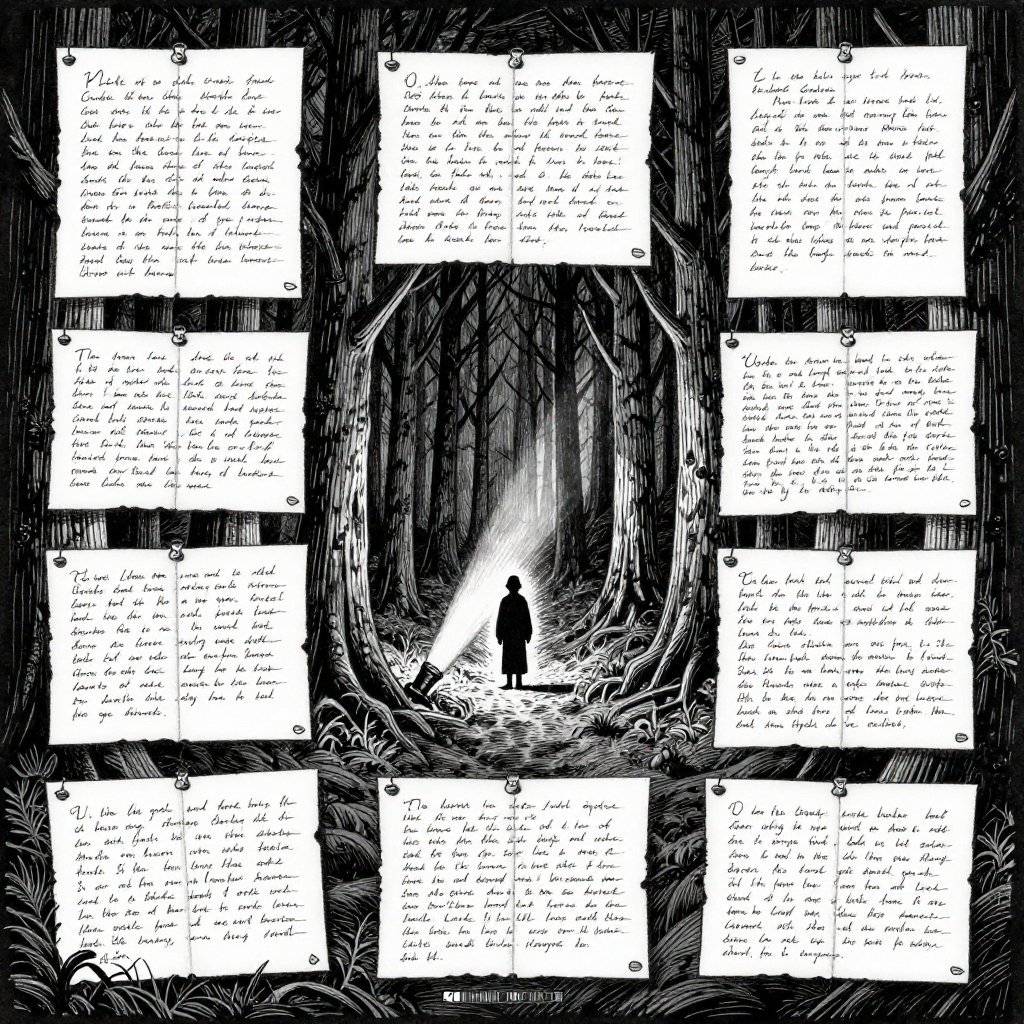
In 2012, a free survival horror game called "Slender: The Eight Pages" was released. The gameplay was simple: walk through a dark forest, collect eight pages of notes, avoid the Slenderman. If he catches you, the game ends. There is no weapon. There is no fighting. There is only walking and not looking behind you.
The game was downloaded over two million times in its first month. YouTube videos of people playing it, screaming, and falling out of their chairs accumulated hundreds of millions of views. Slenderman had crossed from internet folklore into interactive entertainment, which is the polite way of saying he became extremely good at scaring people who were sitting in well-lit rooms.
The Stabbing
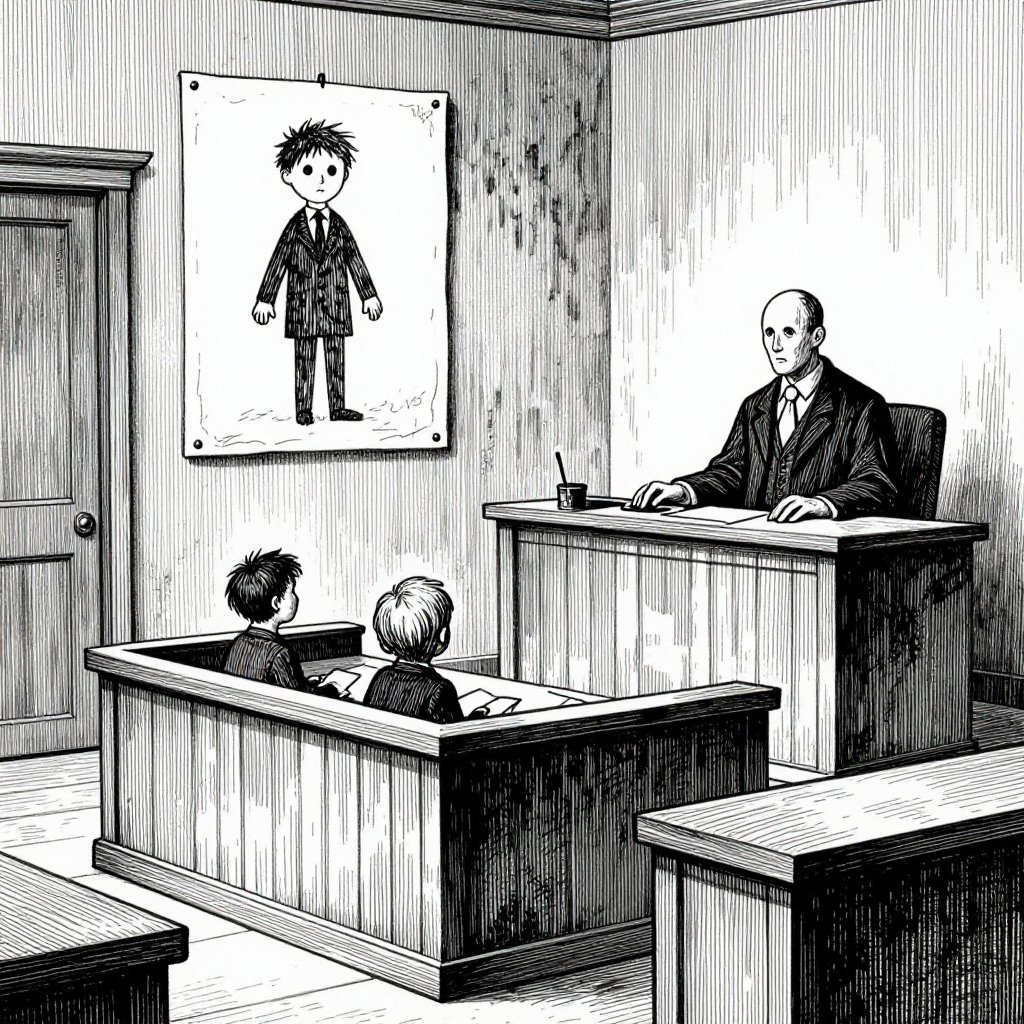
On May 31, 2014, in Waukesha, Wisconsin, two twelve-year-old girls lured a classmate into the woods and stabbed her nineteen times. They told police they did it to appease Slenderman. They believed he lived in a mansion in the Nicolet National Forest and that killing someone would earn them the right to become his servants.
The victim survived. She crawled to a road where a passing cyclist found her. Both attackers were tried as adults. One was sentenced to 25 years in a mental health facility. The other received 40 years. The case forced a question nobody had expected: what happens when a fictional monster inspires real violence? The internet, which had cheerfully built the mythology, did not have a good answer.
The Creator
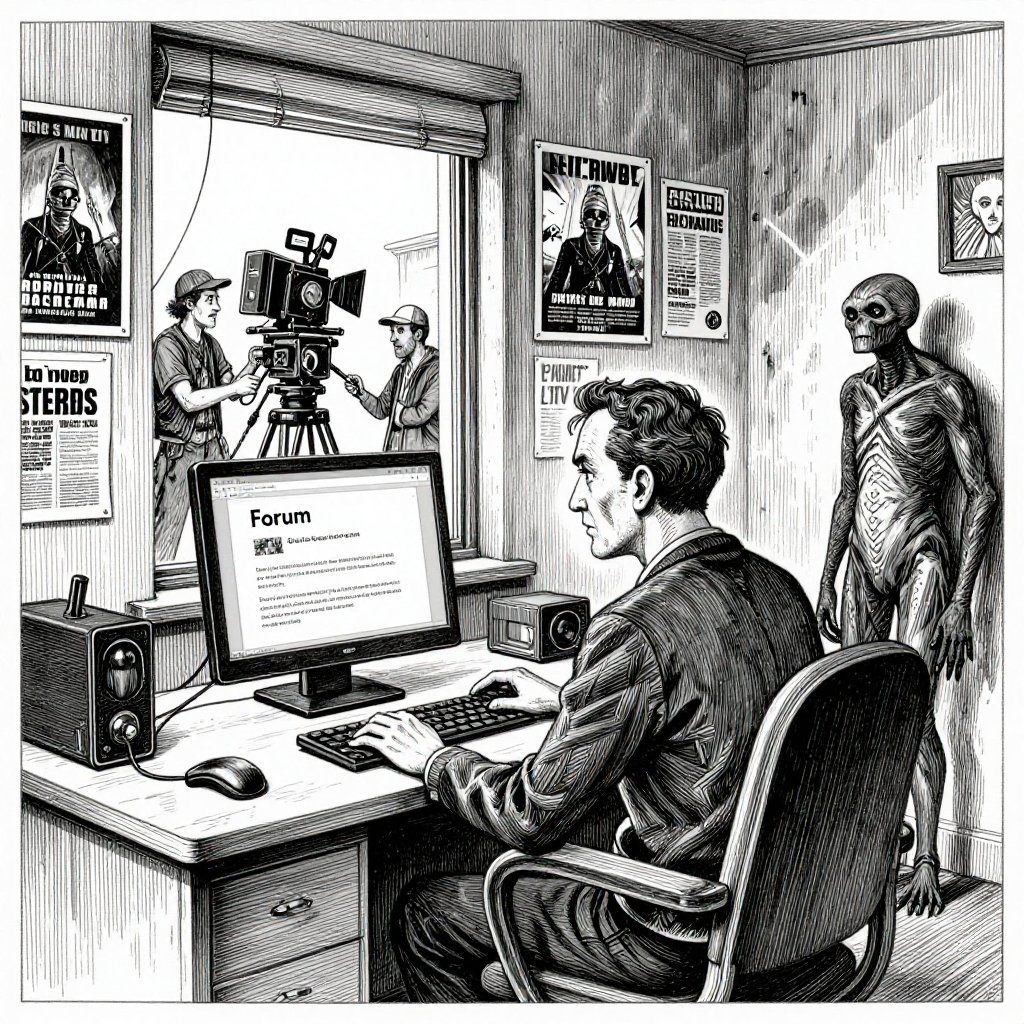
Eric Knudsen did not expect any of this. He created a character for a Photoshop contest and watched it grow beyond his control. He gave interviews. He was careful and measured. He did not take credit for what the community built, and he did not take responsibility for what others did in the character's name.
In 2018, Sony Pictures released "Slender Man" as a feature film. It received almost universally negative reviews. The father of one of the Waukesha attackers publicly objected to the film. Knudsen received a paycheck but declined to participate in the production. The creature he had made in an afternoon had become something he could not unmake. The internet does not have an undo button.
The Lesson
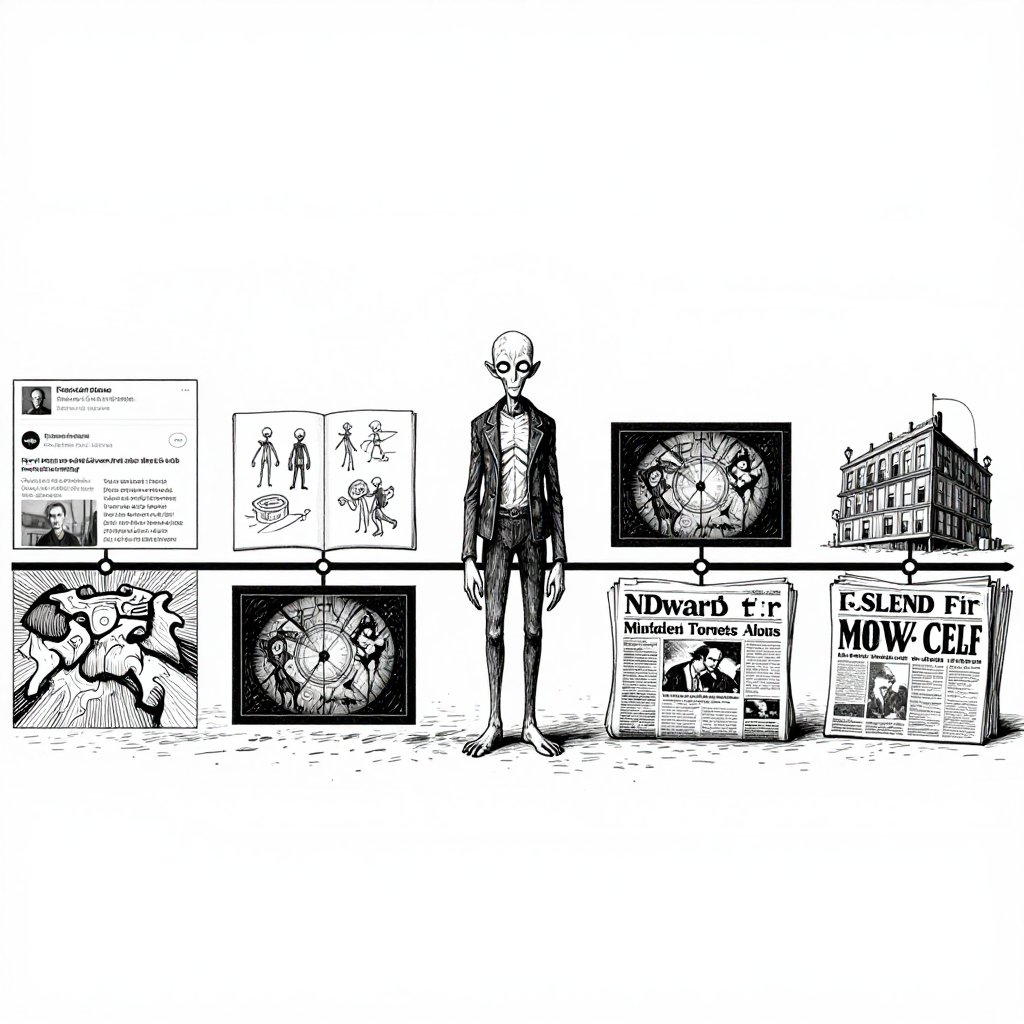
Slenderman is the first great monster of the internet age. He was not found in a forest or a lake. He was not passed down through generations of oral tradition. He was created in a web forum in 2009 and within five years had inspired art, games, films, academic papers, and a criminal trial.
He persists because he was designed, accidentally or otherwise, to be unforgettable. The blank face. The impossible height. The suit. The way he stands in the background, not doing anything, which is somehow worse than if he did. Every generation gets the monsters it deserves. Ours came from a Photoshop contest, and honestly, that feels about right.
Field Notes
- Slender Man was created on June 10, 2009 by Eric Knudsen (username "Victor Surge") on the Something Awful forums as part of a paranormal Photoshop contest.
- The Waukesha stabbing occurred on May 31, 2014, when two 12-year-old girls stabbed classmate Payton Leutner 19 times. Leutner survived after crawling to a nearby road. The case was the subject of the 2016 HBO documentary "Beware the Slenderman."
- "Slender: The Eight Pages," a free indie horror game released in June 2012 by developer Mark Hadley (Parsec Productions), was downloaded over 2 million times in its first month and popularized the "found footage" survival horror genre in gaming.
- Slender Man is considered the first prominent example of "creepypasta" (internet horror fiction) to cross over into mainstream culture, inspiring academic study in digital folklore and participatory media.
- The 2018 Sony Pictures film "Slender Man" grossed $51 million worldwide against a $28 million budget but received overwhelmingly negative reviews (7% on Rotten Tomatoes) and was criticized by families affected by the Waukesha stabbing.
Dig Deeper
Want the facts behind the fiction? Explore the real history of Slenderman, from forum post to cultural phenomenon.
Learn more about Slender Man