
The First Reports

Norse sailors called it the Kraken. They described it as an island that moved. Fishermen would anchor near what appeared to be a shallow bank, cast their nets, and then watch the bank sink beneath them. The water would churn. The fish would scatter. The fishermen would row very quickly in the opposite direction.
The earliest written account appears in the Orvar-Odds saga from the 13th century, which describes a monster so large it was mistaken for an island. Later, the Norwegian bishop Erik Pontoppidan included the Kraken in his 1752 natural history of Norway, describing it as "round, flat, and full of arms." He estimated it was a mile and a half in circumference. The bishop was not known for understatement.
The Arms
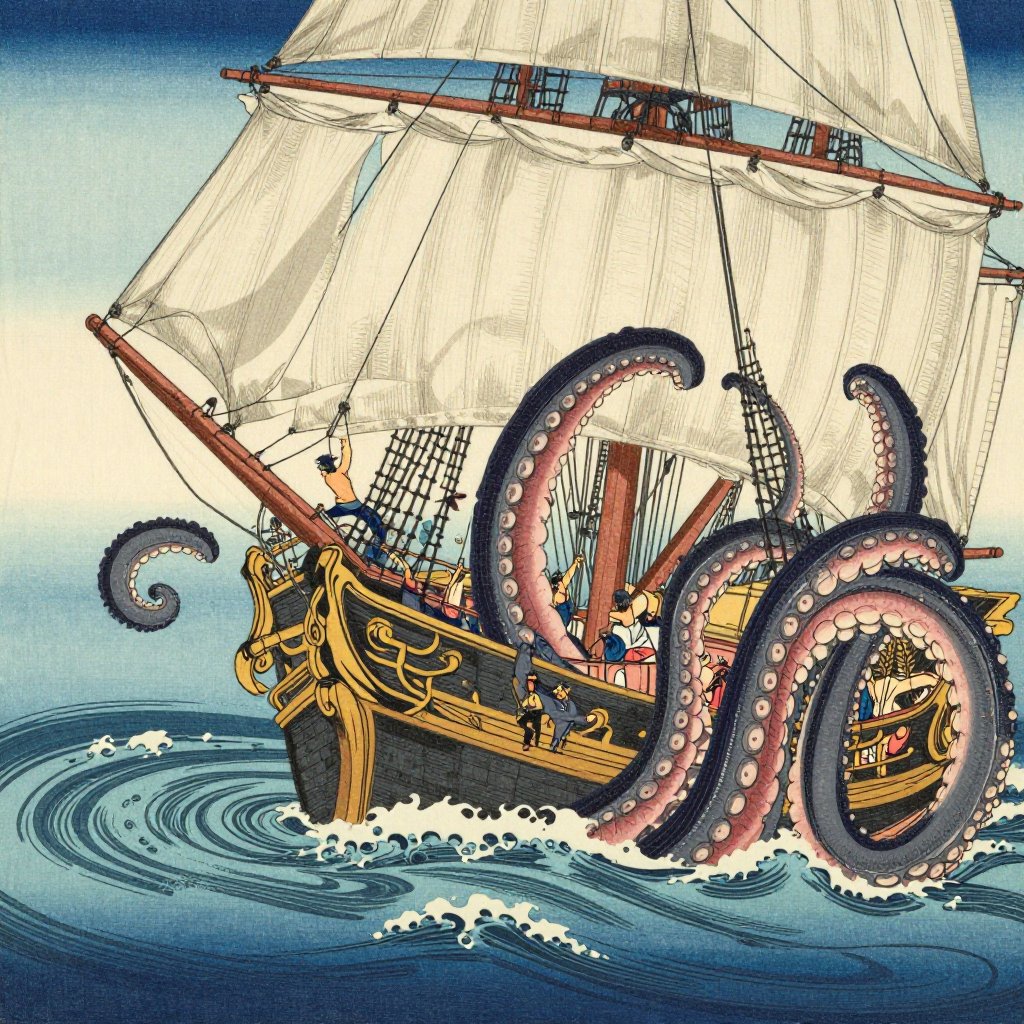
Every Kraken account mentions the arms. Long, thick, covered in suckers, and capable of reaching the mast of a ship. Sailors who survived encounters described being grabbed, pulled, and squeezed. The arms came from below, which is where the worst things always come from.
In many accounts, the Kraken did not need to attack directly. Its mere submersion created a whirlpool strong enough to pull ships under. Surfacing displaced enough water to capsize anything nearby. The creature was dangerous even when it was trying to leave. This is the marine equivalent of a neighbor who cannot back out of a driveway without hitting something.
The Science
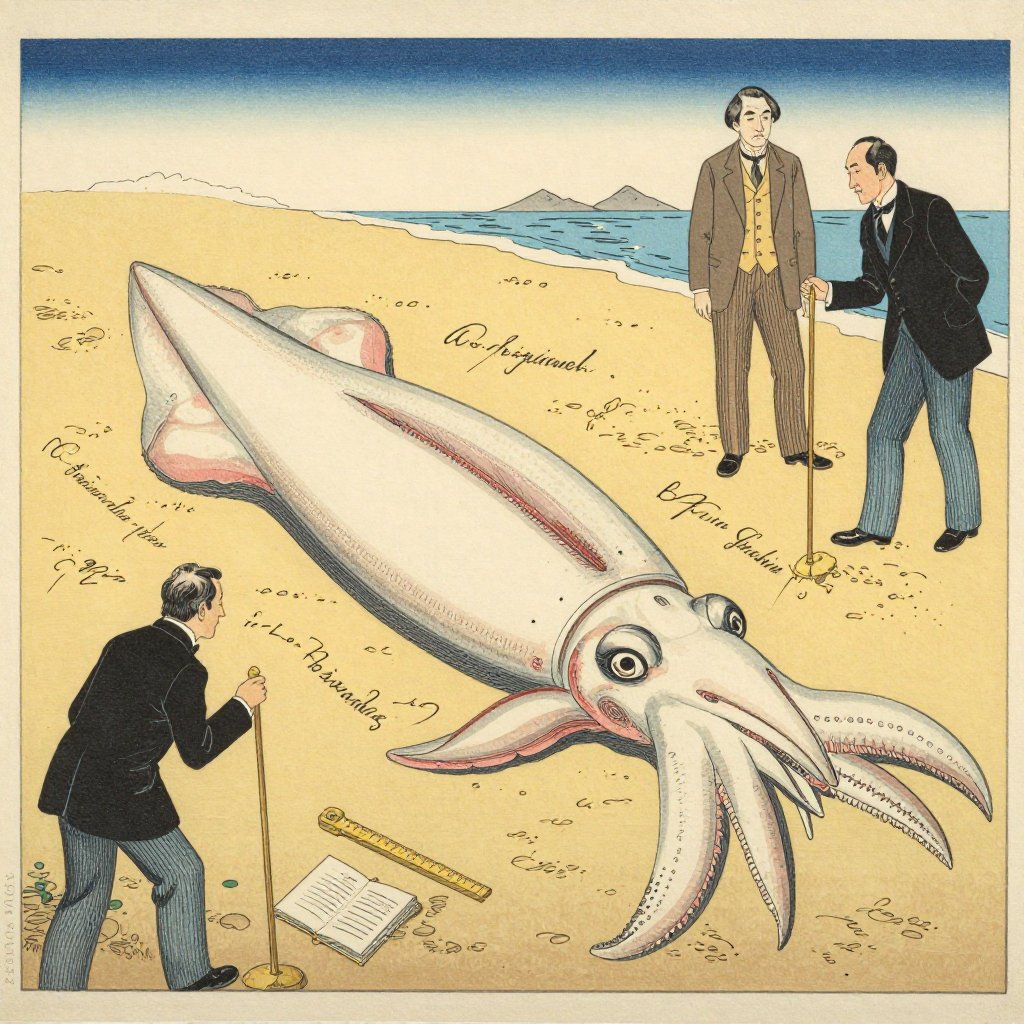
In 1857, Danish zoologist Japetus Steenstrup published the first scientific description of the giant squid, Architeuthis dux. He based it on a beak recovered from a specimen that washed ashore in Denmark. The animal was real. It had arms lined with toothed suckers. It lived in the deep ocean. It grew to extraordinary sizes.
Steenstrup essentially proved that the Kraken, or something very much like it, existed. The scientific community received this information with measured enthusiasm. The public received it with the quiet understanding that the ocean had been keeping secrets and was not sorry about it.
The Specimens
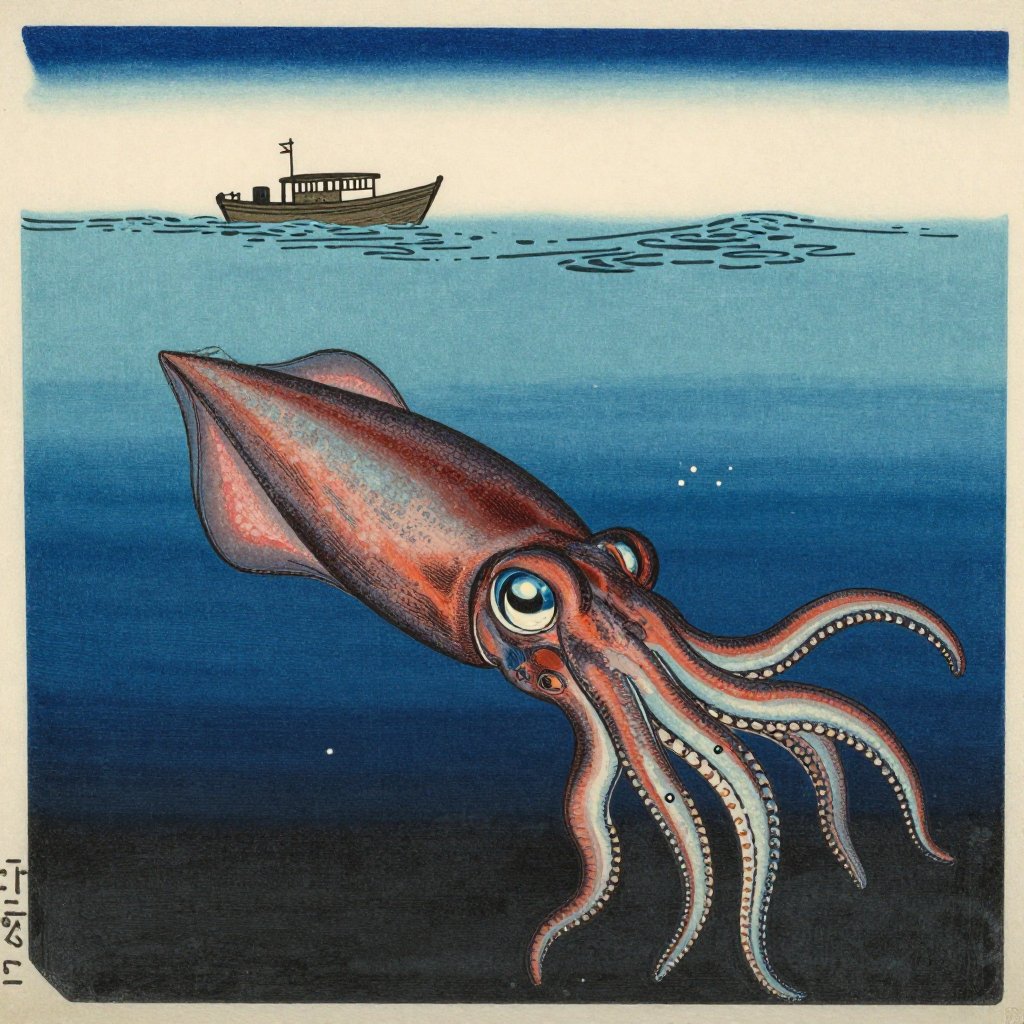
For over a century after Steenstrup's description, no one saw a giant squid alive. Everything known about Architeuthis came from dead specimens: washed ashore, found in whale stomachs, or tangled in deep-sea fishing nets. Each specimen raised more questions than it answered.
The largest confirmed giant squid measured 43 feet, including tentacles. Its eyes were the size of dinner plates, evolved to detect the faint bioluminescence of prey in total darkness. Its beak could cut through fish like scissors through paper. Its brain was shaped like a donut, with the esophagus passing through the center, which meant that eating too large a meal could cause brain damage. Evolution, apparently, has a sense of humor.
The Video
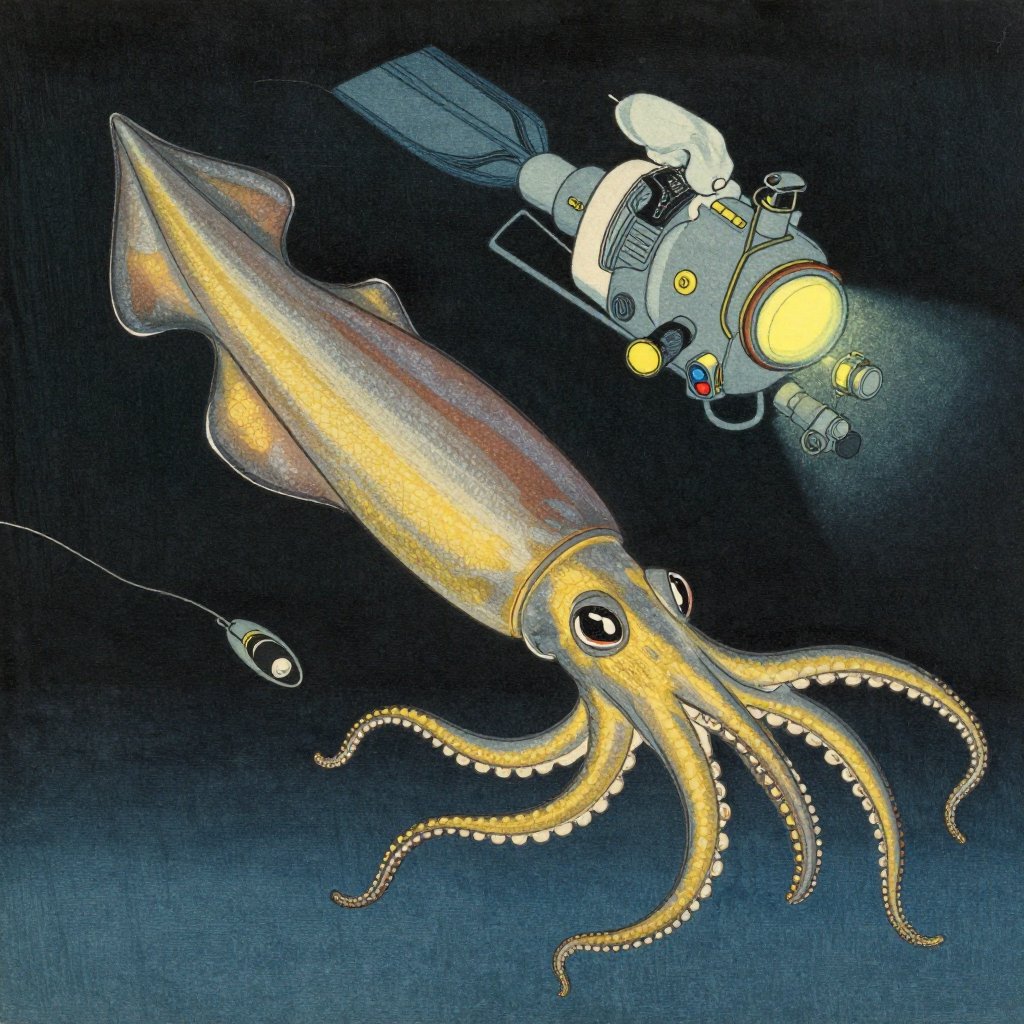
On September 30, 2004, Japanese researchers Tsunemi Kubodera and Kyoichi Mori captured the first photographs of a living giant squid in its natural habitat. The animal was at a depth of 900 meters in the North Pacific. It attacked a baited line and fought for four hours before freeing itself, leaving behind a severed tentacle that measured 18 feet.
In 2012, the same team, along with a Discovery Channel crew, filmed a giant squid on video for the first time. The footage showed a silver and gold animal, graceful and enormous, drifting through darkness. It was not the thrashing monster of legend. It was something quieter and, in its own way, more unsettling: a creature that had been living in the deep ocean for millions of years, perfectly aware that it did not need to be discovered.
What Else Is Down There
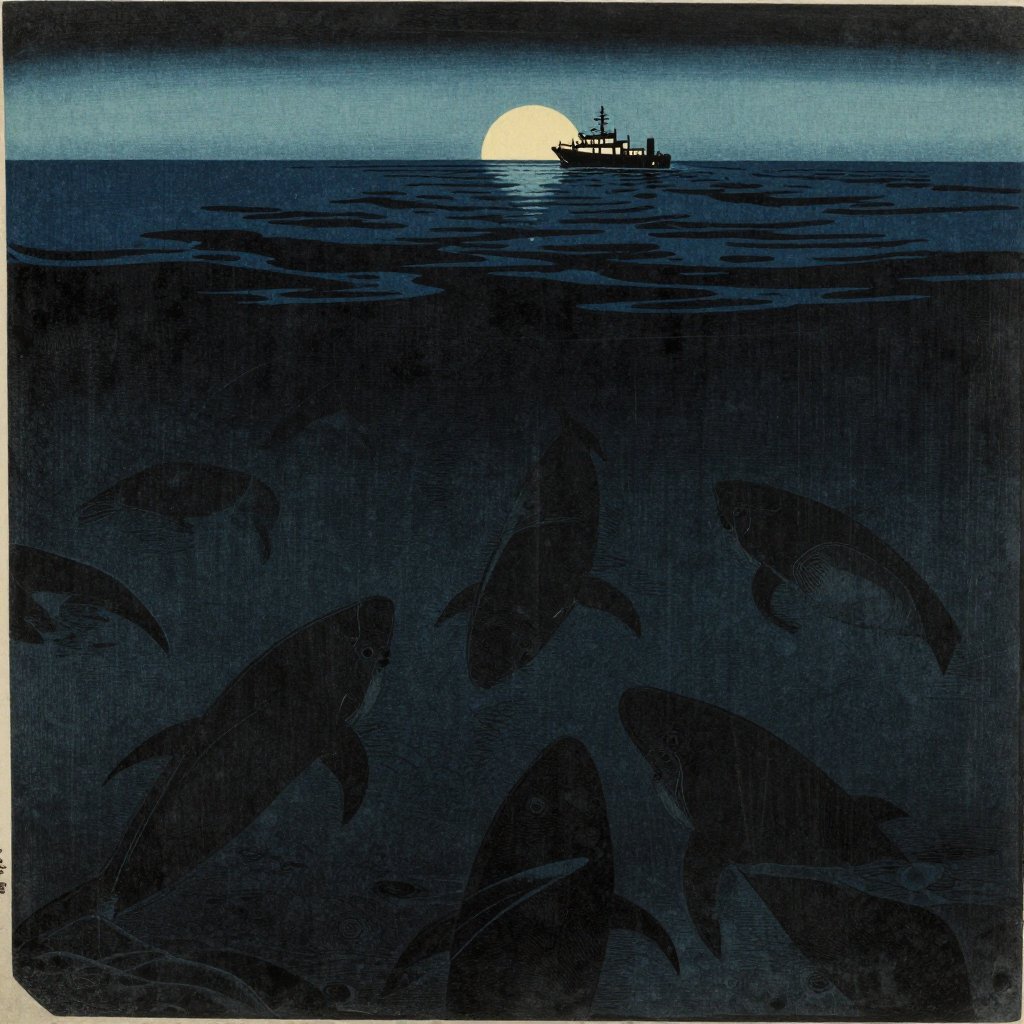
The giant squid is not the largest cephalopod. That distinction belongs to the colossal squid, Mesonychoteuthis hamiltoni, which is shorter but significantly heavier and has rotating hooks on its tentacles instead of suckers. It lives in the deep waters around Antarctica and has been encountered exactly a handful of times.
The ocean covers 71% of the planet's surface. Its average depth is 12,100 feet. Humans have directly explored approximately 5% of it. The Kraken turned out to be real, just rebranded as Architeuthis. This raises an uncomfortable question: what else is down there that we have not named yet? The ocean has no obligation to show us everything. Based on its track record, it probably will not.
Field Notes
- The giant squid (Architeuthis dux) was first scientifically described in 1857 by Danish zoologist Japetus Steenstrup. The largest confirmed specimen measured approximately 43 feet (13 meters) in total length, including tentacles.
- The first photographs of a living giant squid in its natural habitat were taken in September 2004 by Japanese researchers Tsunemi Kubodera and Kyoichi Mori at a depth of 900 meters (2,950 feet) in the North Pacific Ocean.
- The colossal squid (Mesonychoteuthis hamiltoni), first described in 1925, is distinct from the giant squid. It has rotating hooks on its tentacle clubs rather than suckers and is believed to be the heaviest living invertebrate, with specimens weighing up to 495 kg (1,091 lbs).
- Erik Pontoppidan, Bishop of Bergen, included a detailed description of the Kraken in his 1752 work "The Natural History of Norway," treating it as a real animal and estimating its body at one and a half miles in circumference.
- Giant squid eyes can reach up to 27 centimeters (about 11 inches) in diameter, making them the largest eyes in the animal kingdom. This adaptation allows them to detect the faint bioluminescence of predators like sperm whales in the deep ocean.
Dig Deeper
Want the facts behind the folklore? Explore the real history of the Kraken, giant squid, and the deep ocean.
Learn more about the Kraken