The Bottoms
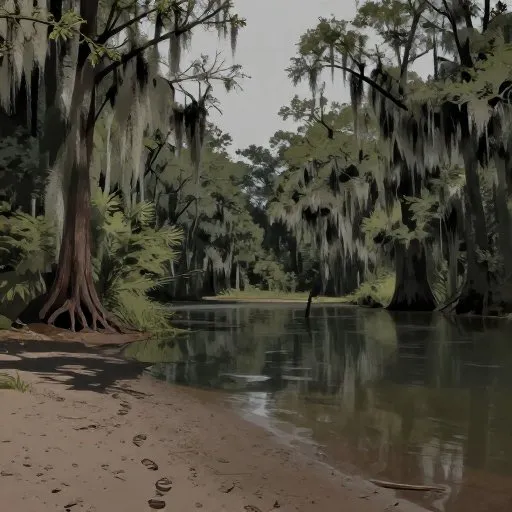
The Fouke Monster is a large, hair-covered, three-toed creature reported in the swampy bottomlands around Fouke, Arkansas, a town of roughly eight hundred people in the far southwestern corner of the state. Fouke sits in Miller County, about fifteen miles south of Texarkana on US Highway 71, in the wedge of land where Arkansas meets Texas and Louisiana. The creature is also called the Boggy Creek Monster, after the stretch of Sulphur River swamp on the edge of town that both locals and, later, Hollywood came to call Boggy Creek. It has been reported there since at least the 1940s. If you searched for it and landed on a page that spells the town Faulk, that is the same place: it is Fouke, one syllable, rhymes with poke, and the people who live there have been correcting that spelling for half a century.
The town has one main road, several churches, and a reputation it did not entirely ask for. The creature that carries its name was already a fixture in local talk well before anyone outside Miller County had heard of it. Farmers in the bottoms described damaged crops, spooked livestock, and a large bipedal animal that smelled terrible and moved at night. Nobody had made a movie about it yet. That part came later.
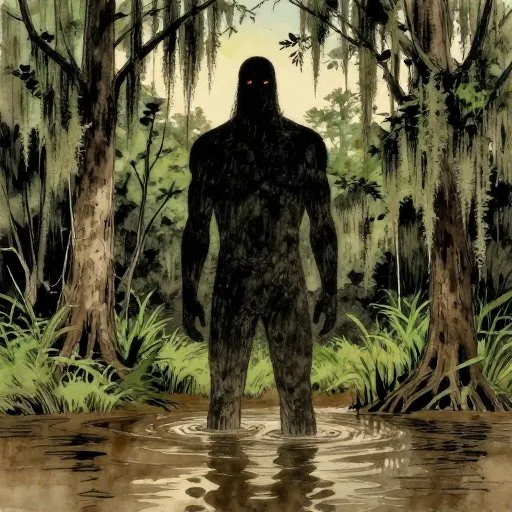
The Fouke Monster is, by all accounts, large. Estimates range from seven to ten feet tall when upright, though upright was not necessarily its preferred configuration. It ran in a crouched lope, covering ground faster than it had any right to. It was covered in dark reddish-brown hair. It had three toes, not five. The smell preceded it by several hundred feet and lingered for hours after it was gone. Witnesses described the smell consistently: wet dog, sulfur, and something else nobody ever had a good word for.
The Ford Family
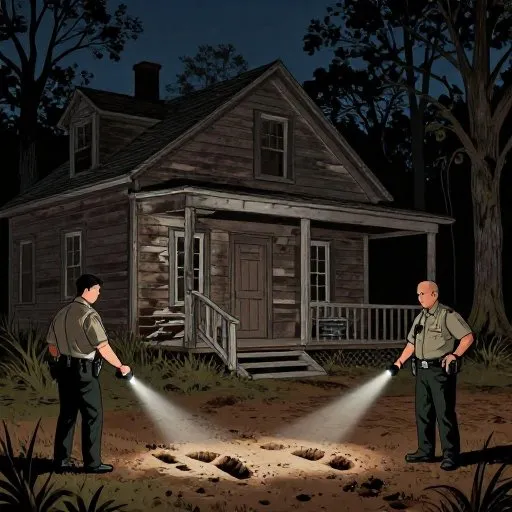
In May of 1971, Bobby Ford and his family moved into a rental house outside Fouke. They were there for roughly two weeks before something tried to come in.
The first night, something reached through an open window and grabbed Bobby Ford. He got free. The family called the sheriff. The sheriff came, looked around, found nothing, and left. The second incident involved something on the porch large enough to break a board and leave deep, three-toed impressions in the soft ground. Bobby Ford went out to investigate and was grabbed again, this time more firmly, and pulled partway off the porch. The men with him pulled him back. The creature let go and disappeared into the dark.
Bobby Ford was taken to the hospital. He was treated for shock and for scratches on his back and arm, and the family's account of that night, told and retold to reporters over the following weeks, did not change in its essentials. The Ford family moved out of the house. This was the rational decision and it should not be criticized.
The Miller County Sheriff's Department opened an investigation. Deputies found tracks. Residents of the area came forward. Older sightings from the previous two decades were suddenly relevant again. The story made the regional papers, then the wire services, then network news, and then a filmmaker drove down to see what was happening.
The Movie
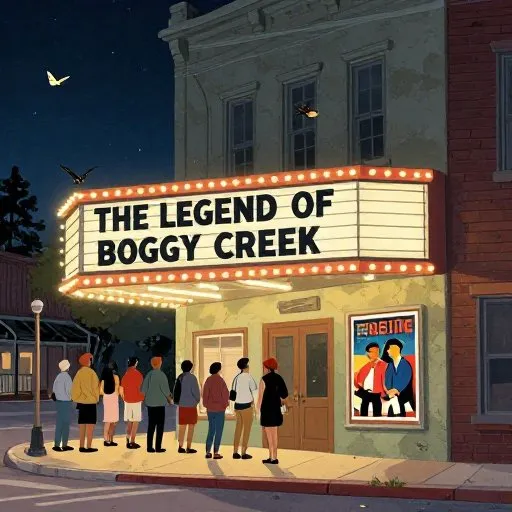
Charles B. Pierce was a filmmaker and a Texarkana advertising man who recognized a story when it arrived this close to a camera. He spent about $160,000 making The Legend of Boggy Creek, a docudrama about the Fouke Monster, shot on 16mm to keep costs down. He used local residents as actors. He used the actual locations. He used, where he could, the actual accounts.
The film opened in 1972, narrated by broadcaster Vern Stierman in a flat, folksy, just-the-facts cadence that did as much to sell the docudrama style as anything Pierce shot on location. It grossed over twenty million dollars at the box office, one of the highest-grossing independent films of the decade. For a creature that had been moving through Miller County for thirty years without any wider interest, this was an unexpected development.
The Legend of Boggy Creek is not a polished film. The acting, from people who are not actors, is exactly what you would expect. The narration is earnest in a way that later audiences found either charming or unintentionally funny, depending on where they sat in the theater. But the documentary approach, shooting in real places with real witnesses, produced something that unsettled people the way professional horror often does not. The creature is barely on screen. The bottomlands are on screen constantly. The bottomlands do most of the work.
Pierce made a follow-up years later, and other hands made sequels after that. None performed like the original. The first film was the kind of thing that happens once, when the story is new, the locations have not been dressed for production, and the people telling their stories still believe them.
The Evidence
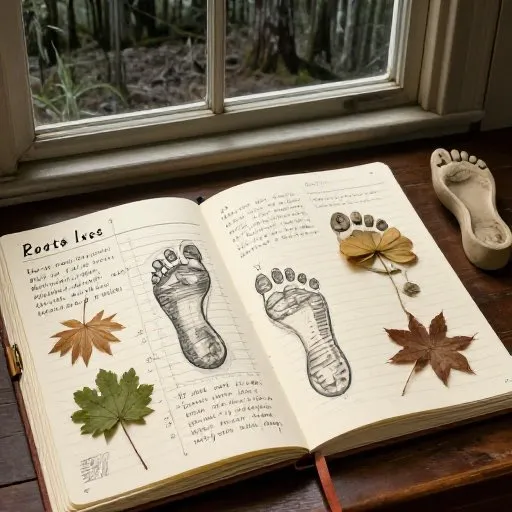
The record of physical evidence in Fouke Monster cases is better than average for cryptids, which is to say still thin, but not nothing.
The three-toed tracks are the most persistent detail: reported across multiple decades and multiple witnesses who did not know each other. This matters because most large bipedal animals leave five-toed prints, and if you are inventing a monster from scratch, five toes is the default your imagination reaches for. Three toes suggests one of a few things: a real animal with unusual anatomy, a remarkably consistent hoax maintained across several generations of Miller County residents, or something in between.
There have been hair and scat samples submitted for analysis over the years, none of which produced a clean, unknown match. There have been recorded sounds, described as a howl-grunt hybrid that witnesses insist matches no catalogued animal of the region. And there was the 1978 account of a creature found dead on a local road, which turned out to be a very large, very dead black bear. The bear explanation has been offered for earlier sightings too. Black bears do inhabit the Sulphur River bottoms. They are large, dark, and capable of rising onto their hind legs. A bear, seen at night, at close range, by someone not expecting a bear, can produce a very alarming account.
The researchers who argue the tracks are not bear tracks are correct that they do not look like bear tracks. The people who insist the smell is distinct from a bear's are hard to argue with too. What none of them can supply is the specific animal making the tracks and producing the smell. That is where the evidence has sat for eighty years, and it has not noticeably moved.
The Tourism Economy
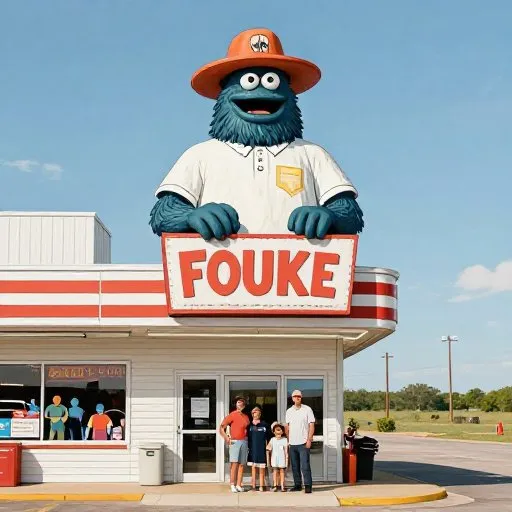
Fouke, Arkansas, did not squander its reputation. The Monster Mart began as a convenience store and gift shop and leaned fully into the creature's brand. It has a large Fouke Monster statue out front. It sells merchandise, books, DVDs, postcards, and photographs. Visitors come from across the country to take pictures with the statue and buy something to prove they were there. This is legitimate economic activity and the town should be proud of it.
The annual Fouke Monster Festival draws thousands of visitors to a town that otherwise has no particular reason to draw thousands of anyone. The festival runs to live music, food vendors, cryptid-themed activities, and the chance to hear first-hand accounts from people who live in the bottoms and still talk, decades later, about things they saw.
Multiple books have been written about the Fouke Monster. Follow-up documentaries have been produced. A semi-regular stream of paranormal television crews has driven down to Miller County, pointed cameras at the Sulphur River bottoms, and recorded what the Sulphur River bottoms always record: trees, water, insects, and darkness. The programs air anyway. People watch them anyway. The monster is still out there, or not out there, making the same non-appearance it has been making since 1971.
The Sulphur River
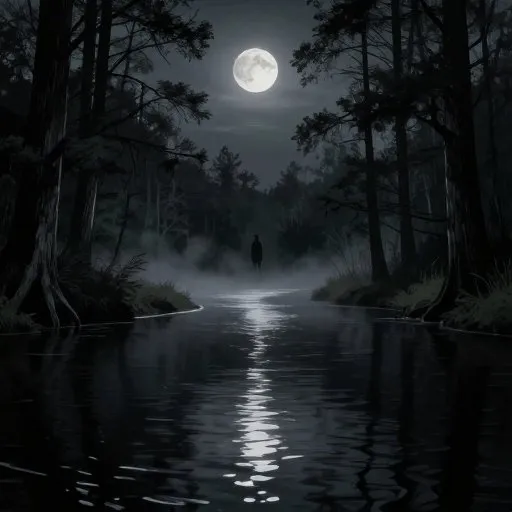
The Sulphur River bottomlands are still there. They have not been developed, partly because floodplain along a flood-prone river in southwestern Arkansas is not prime real estate, and partly because nobody has found a use for it that covers the cost of holding the water back. The trees press close to the channel. The current moves in ways that are hard to read. At night, in summer, the sounds that come out of the bottoms are numerous and biological and completely normal, and also somewhat alarming if you are not from there.
Whatever the Ford family met in 1971, it was never definitively identified. The tracks were never explained. The film is still available to watch, and it holds up as a document of a specific time and place and the specific quality of fear the Arkansas bottomlands produce in people who are not expecting it.
Fouke is a small town in a flat corner of the country most Americans could not find on a map without help. It has a gas station, several churches, the Monster Mart, and a creature that has been walking its edges for the better part of a century. That creature has generated more economic activity for the town than anything else in its history. If it exists, it owes Fouke a considerable debt. If it does not exist, the town made the most of a story it did not invent, which is not a bad talent to have.
Kin in the Underbrush
The Fouke Monster does not stand alone in Southern cryptid lore. Head south into the Florida Everglades and swamp dwellers describe the Skunk Ape, a foul-smelling, bipedal creature with sightings on record since at least the 1960s and a name that gets straight to its worst quality. Read its mostly true tale here. The overlap with Fouke is not subtle: swamp habitat, nocturnal sightings, and witnesses reaching for the same handful of words to describe the smell.
Further afield, the Goatman turns up in regional legend from Maryland to Texas, a hybrid figure, part man, part goat, blamed for livestock deaths and reported along back roads and creek bottoms since at least the mid-twentieth century. Its mostly true tale sits alongside Fouke's on this site, another case of rural communities giving a name to something moving at the edge of the headlights.
The Wampus Cat comes from Cherokee and Appalachian tradition, a panther-like creature with roots in Southeastern folklore that predate European settlement of the region, still told and retold across Tennessee and the surrounding hill country. Its story is here too.
None of these creatures share a documented ancestor. What they share is geography and a kind of narrative convenience: dense woods, isolated communities, and a long Southern habit of explaining the unexplainable with something that walks on two legs and smells bad. Fouke's version just happened to get a movie.
Field Notes
- Fouke is a town of roughly eight hundred people in Miller County, in the far southwestern corner of Arkansas, about fifteen miles south of Texarkana along US Highway 71, next to the Sulphur River bottoms locals call Boggy Creek.
- In May 1971, Bobby Ford reported being grabbed through a window and later pulled partway off the porch of a rental house outside Fouke. The Miller County Sheriff's Department investigated and documented three-toed tracks at the scene.
- Charles B. Pierce's 1972 docudrama The Legend of Boggy Creek was shot on a budget of about $160,000 using Fouke residents and real local locations, and grossed more than $20 million, making it one of the most profitable independent films of the decade.
- The film's narration was delivered by broadcaster Vern Stierman, whose flat, matter-of-fact delivery became as much a part of the movie's identity as the creature itself.
- In 1978, a dead animal found on a Miller County road was identified as a black bear, a species that does inhabit the Sulphur River bottoms and has been offered as an explanation for some historical sightings.
- Fouke now hosts an annual Fouke Monster Festival and the Monster Mart gift shop, turning the legend into the town's most visible export.
Dig Deeper
Want the facts behind the folklore? Explore the real history of the Fouke Monster, from the Sulphur River bottoms to one of the most profitable indie films of the 1970s.
Learn more about the Fouke Monster