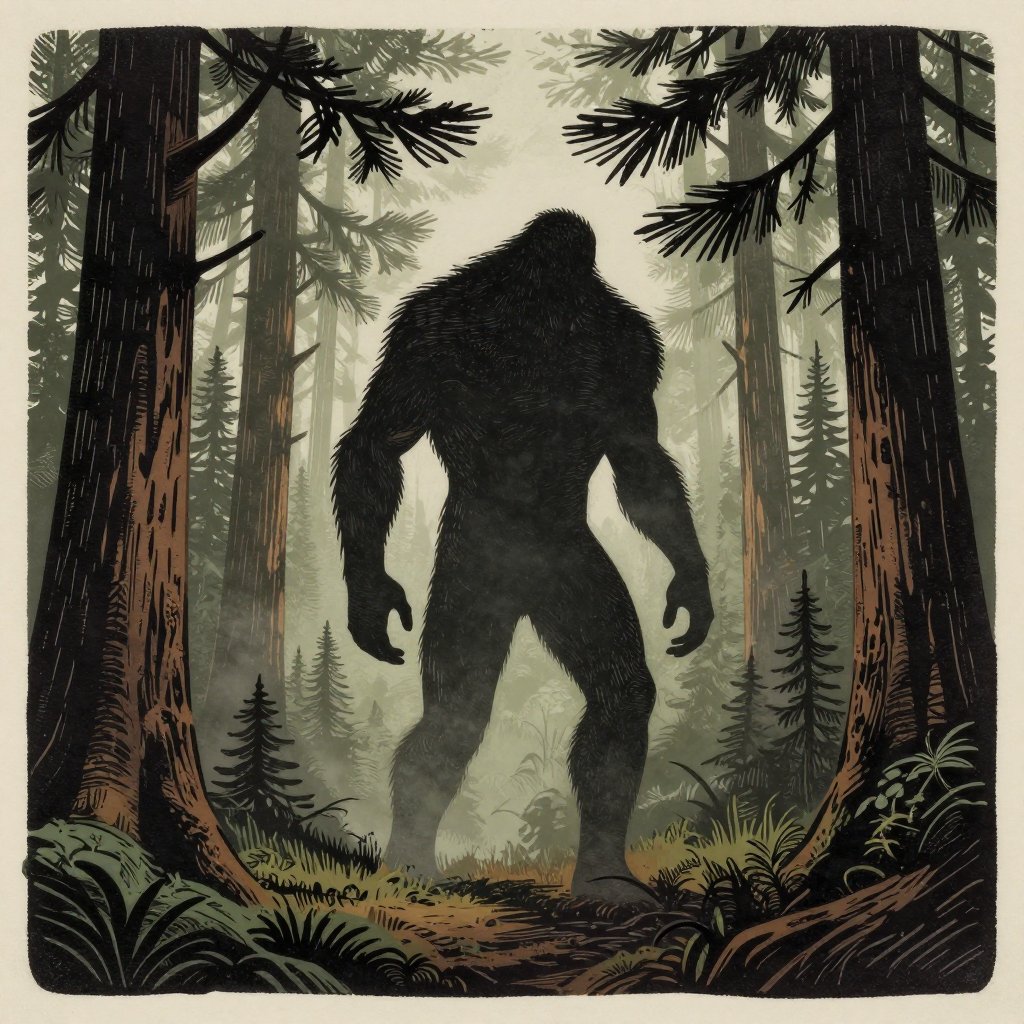
The Footprint
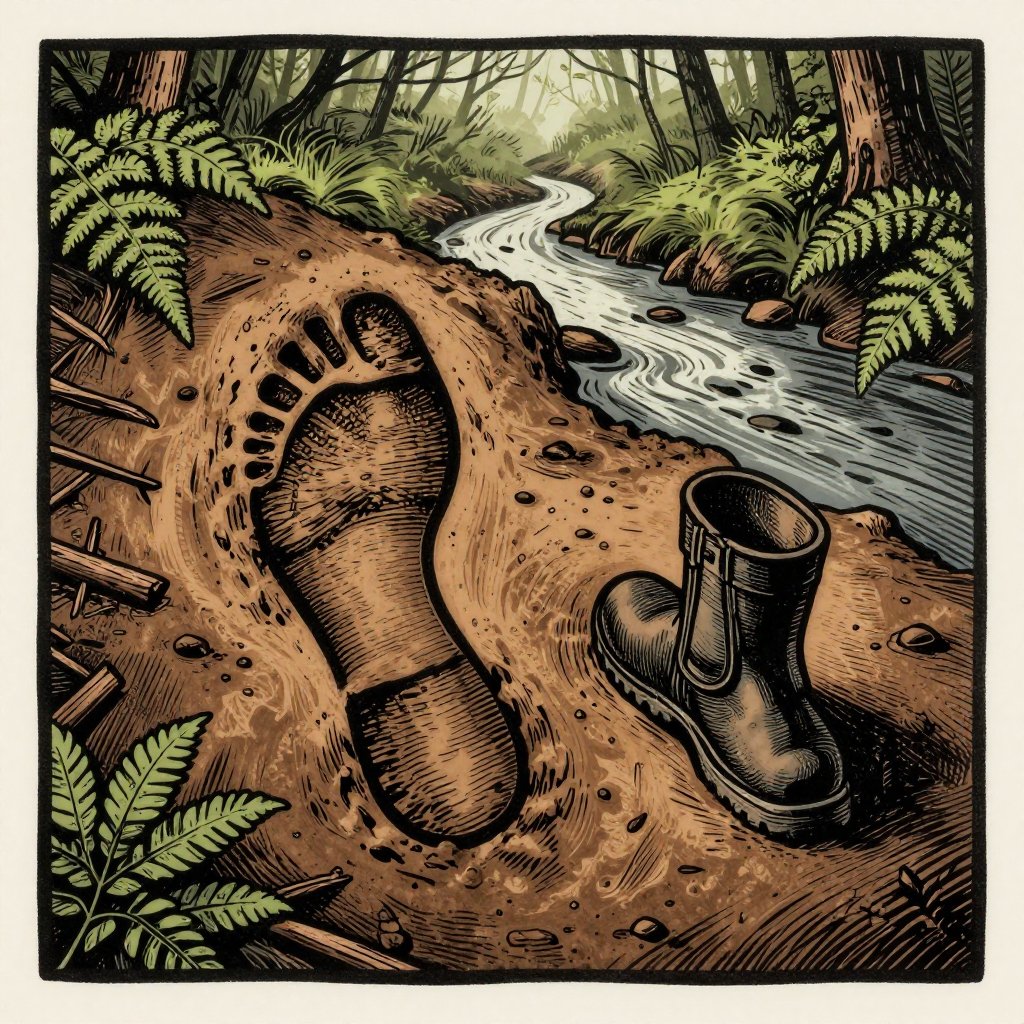
In 1958, a man named Jerry Crew found footprints in the mud near Bluff Creek, California. They were sixteen inches long. His boots were eleven. Jerry was not a small man.
He made a plaster cast, brought it to the local newspaper, and the paper ran the story under a simple headline: "Bigfoot." Just like that, a legend had a name. The creature didn't choose it. Focus groups were not involved.
The Home Movie Nobody Asked For
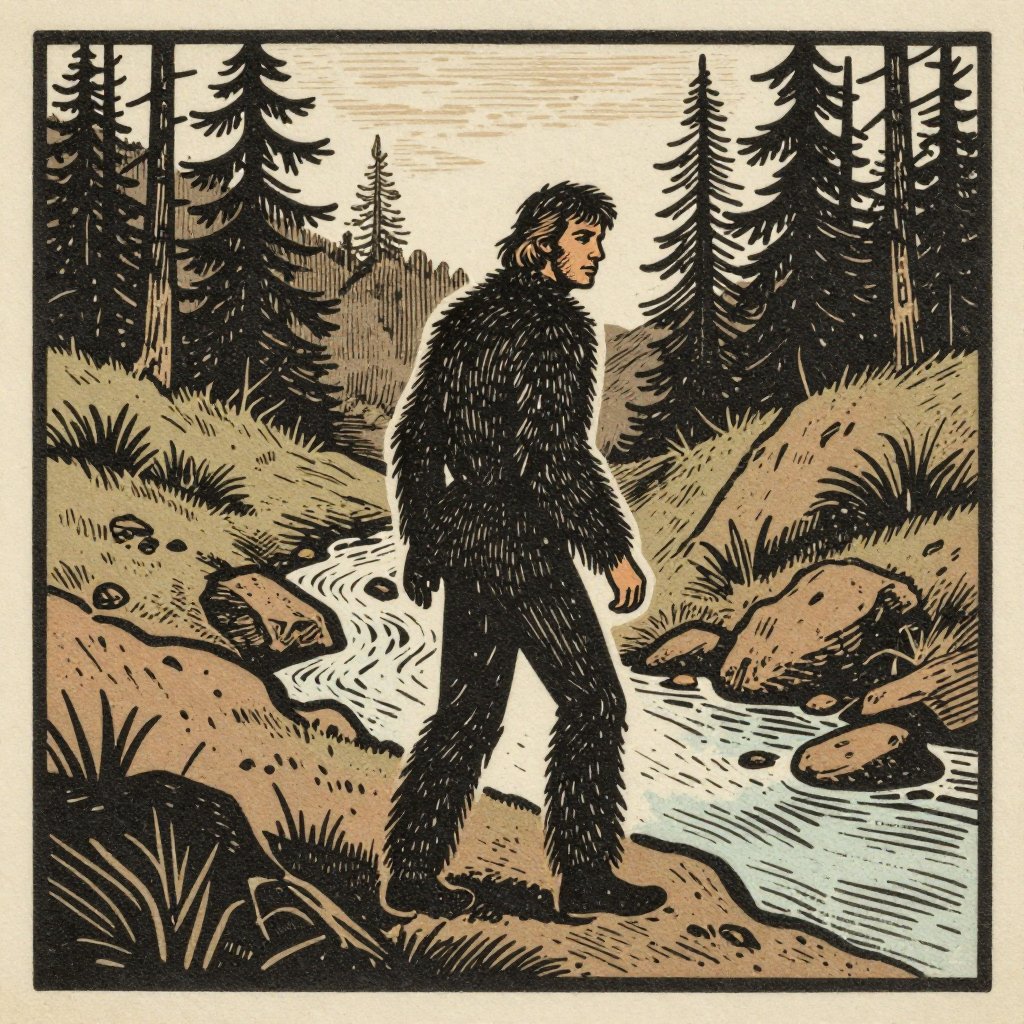
Nine years later, Roger Patterson and Bob Gimlin rode horses into the same stretch of Northern California forest with a rented 16mm camera. On October 20, 1967, they filmed something walking along the creek bed. Something large, upright, and covered in dark hair.
The footage lasts less than a minute. It is grainy, shaky, and shot at a distance that makes identification impossible. In other words, it is the single most famous piece of wildlife footage ever recorded. Frame 352 shows the creature mid-stride, glancing back at the camera. That look says: "Really? You brought a rented camera?"
The Naming Problem
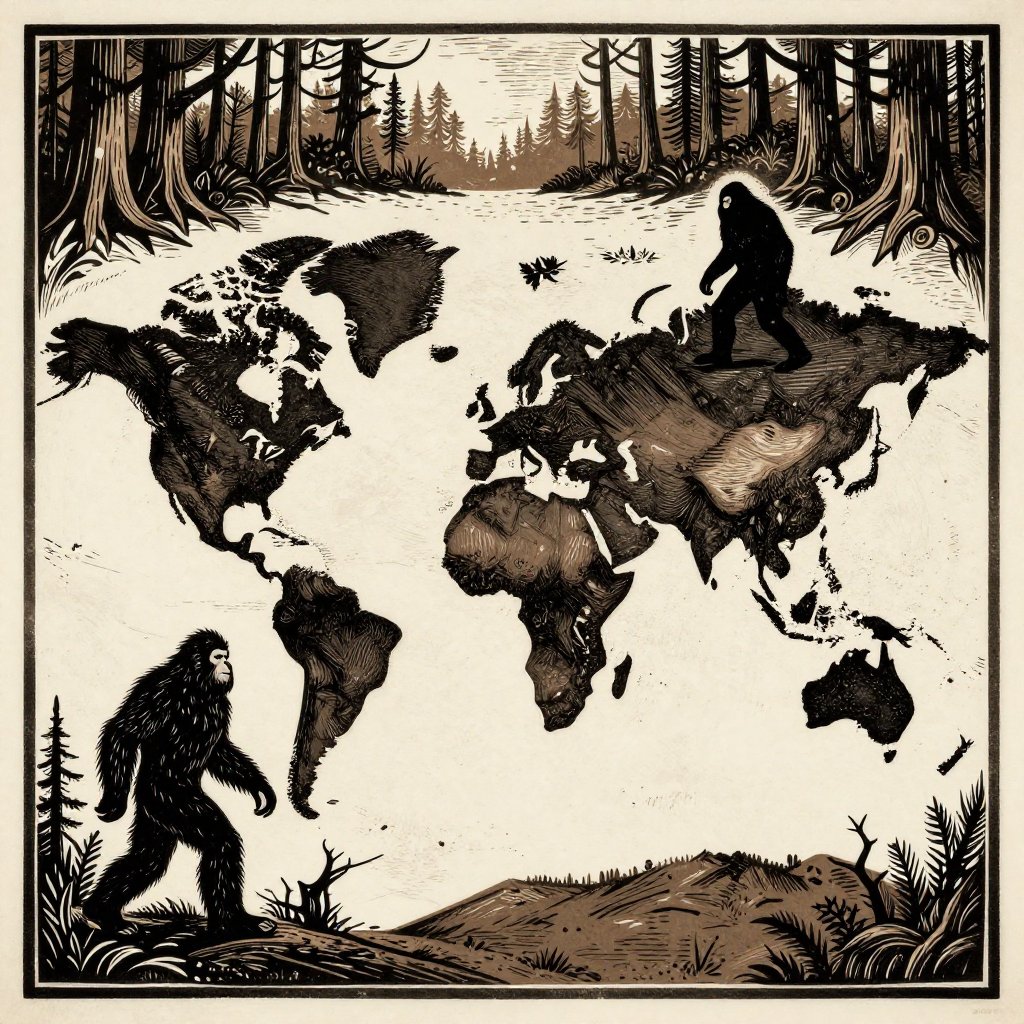
Bigfoot goes by many names. Sasquatch comes from the Halkomelem word "sasq'ets." In the Himalayas, his cousin goes by Yeti. In Australia, the Yowie fills a similar role. Each culture that has large forests and questionable lighting conditions seems to have developed its own version.
The scientific community calls him Gigantopithecus (if feeling generous) or "statistically improbable" (if not). Cryptozoologists call him the holy grail. Camping supply companies call him excellent for business.
The Evidence Locker

The evidence for Bigfoot falls into four categories. Footprints: thousands of them, found across the Pacific Northwest, varying in size from "large" to "comically large." Hair samples: collected from bark, branches, and suspicious locations. When tested, they usually belong to bears, elk, or occasionally, humans wearing gorilla suits.
Audio recordings: the "Sierra Sounds" tapes from the 1970s feature howls, grunts, and what some researchers describe as a language. Others describe it as two men with a tape recorder and too much free time. Sightings: over ten thousand reported in North America alone. Not one has produced a clear photograph. Bigfoot remains the most documented creature that technically does not exist.
The Confession
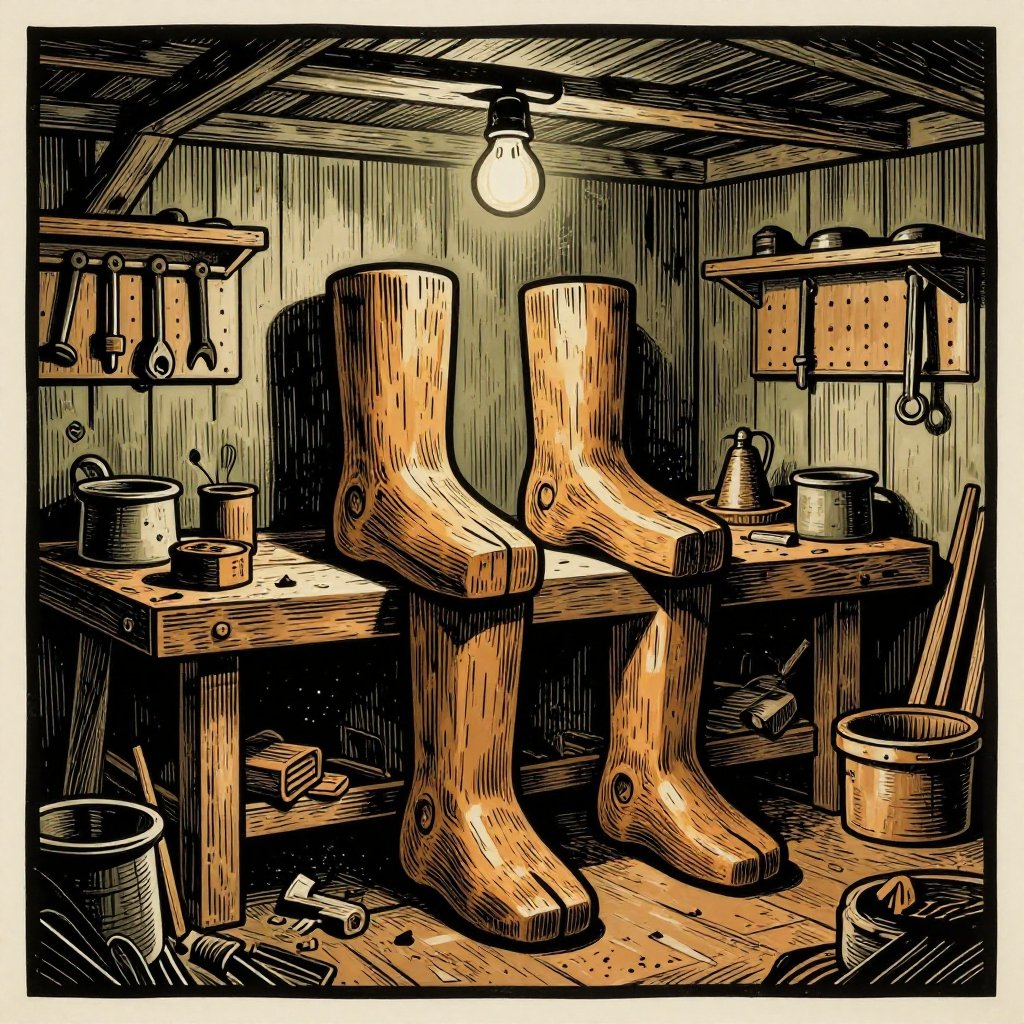
In 2002, the family of Ray Wallace revealed that he had faked the original 1958 footprints. He had carved wooden feet, strapped them to his boots, and stomped around Bluff Creek for laughs. The footprints that gave Bigfoot his name were made by a man with a woodworking hobby and a very specific sense of humor.
This should have ended the story. It did not. The Bigfoot community absorbed the confession like a lake absorbs a stone. The ripples lasted about a week. Then the search continued, because one hoax does not disprove every sighting. It just proves that some people will go to extraordinary lengths to leave big footprints.
Still Out There (Probably Not)
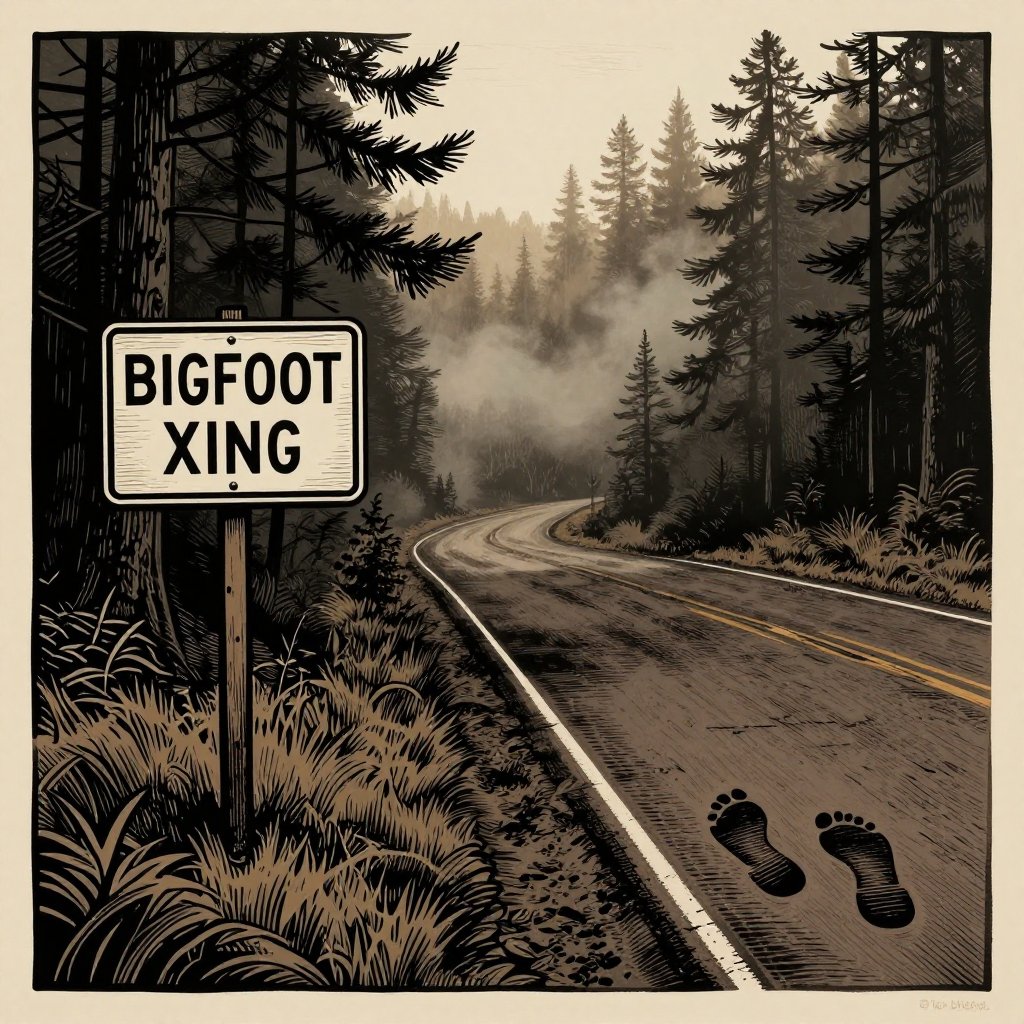
Today, Bigfoot is a protected species in Skamania County, Washington, where killing one carries a potential fine and jail time. He has his own festival in Willow Creek, California. He appears on bumper stickers, craft beer labels, and at least one local news broadcast per year.
No body has ever been found. No bones. No teeth. No definitive DNA. Just a growing collection of blurry photographs and a lingering feeling in the woods that something very large just stepped behind that tree. Bigfoot's greatest skill was never hiding. It was staying just interesting enough that people keep looking.
Field Notes
- The Patterson-Gimlin film, shot October 20, 1967 near Bluff Creek, California, remains the most analyzed piece of alleged Bigfoot evidence. No one has definitively proven it real or fake.
- Skamania County, Washington passed Ordinance 69-01 in 1969, making it illegal to kill a Bigfoot. The penalty: up to five years in prison and a $10,000 fine.
- The word "Sasquatch" derives from "sasq'ets" in the Halkomelem language of the Coast Salish peoples of British Columbia.
- The Bigfoot Field Researchers Organization (BFRO) maintains a database of over 5,000 reported sightings across North America, with the highest concentrations in Washington, Oregon, and California.
- In 2014, a study published in the Proceedings of the Royal Society B analyzed 36 alleged Bigfoot and Yeti hair samples using DNA sequencing. Every sample was identified as a known animal: bears, cows, horses, raccoons, and humans.
Dig Deeper
Want the facts behind the folklore? Explore the real history of Bigfoot sightings, evidence, and cultural impact.
Learn more about Bigfoot